
training
Towards accessible cultural institutions
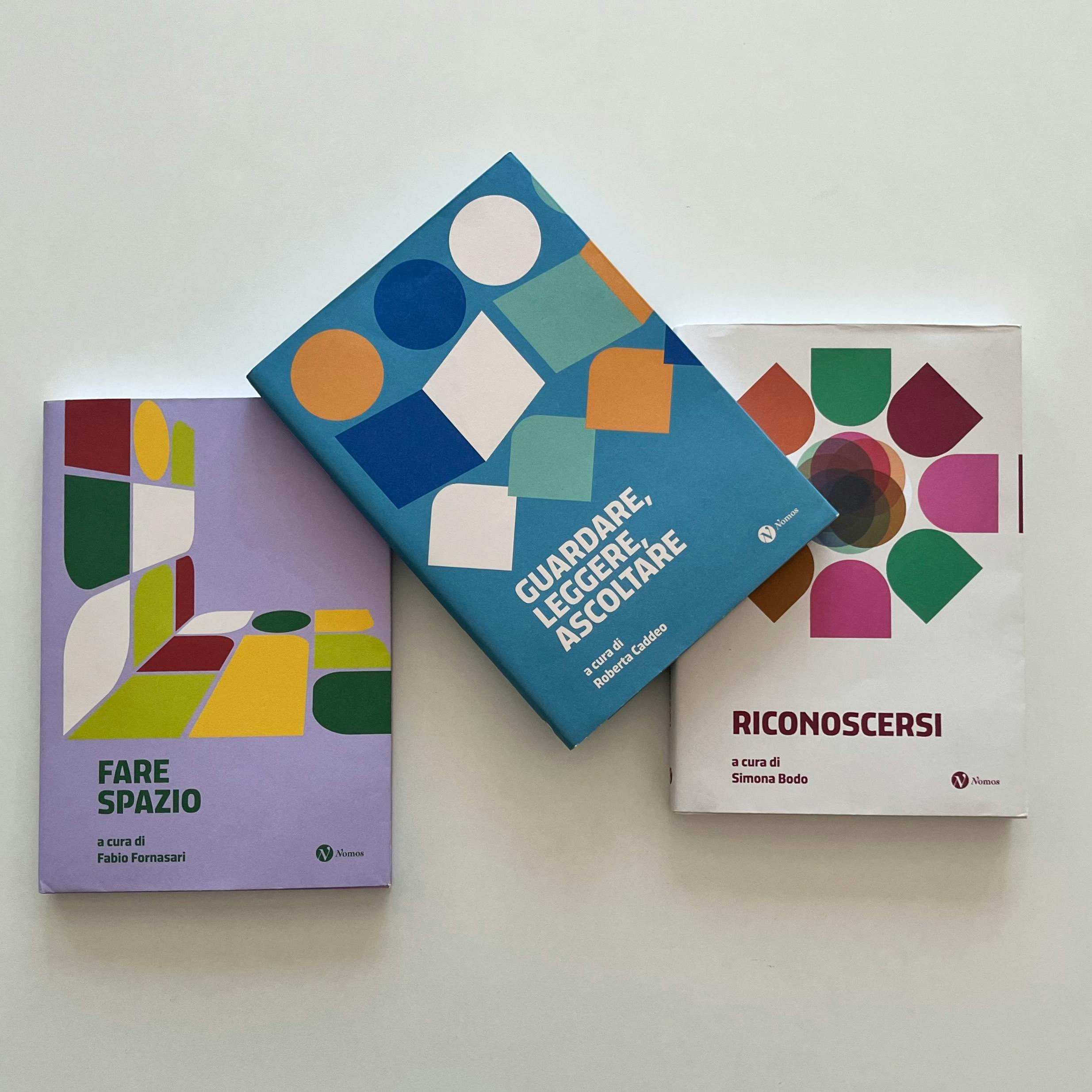
A collection of three volumes is available in bookstores published as part of the Personeper program. Accessibility in cultural places. An editorial proposal, curated by Anna Chiara Cimoli and Domenico Sergi, which contributes to the public debate on cultural accessibility addressing museums, archives, and libraries as spaces of rights, participation, and social development.
Through foreign contributions translated into Italian for the first time, original contributions specially commissioned, and an array of illustrations, the publications each tackle a macro-issue — space, language, representation — from a perspective transversal to the different cultural places.
Mediate, tell, communicate
Tellingcultural heritage today means making content, languages, and experiences accessible to increasingly diverse audiences. Mediare, raccontare, comunicare (Mediating, Narrating, Communicating) is the online course, available at fad.fondazionescuolapatrimonio.it, for professionals working in curating, education, mediation, and communication of cultural heritage and collections
"Operatori culturali per l'inclusione"
The "Operatori culturali per l'inclusione" project was created to train museum and cultural service staff in inclusive approaches, promoting culture as a heritage accessible to all. The initiative enhances relational skills and knowledge about disabilities, combining theoretical, workshop, and practical training. Follow-up research has highlighted a real change in attitudes and organizational processes, making structures more inclusive. The model, shared and replicable, confirms how inclusion and participation are inseparable from the quality of the cultural experience.
Breaking down relational barriers in access to cultural places
The article addresses the theme of accessibility to cultural places as a fundamental right of people with disabilities, also enshrined by the UN Convention on the Rights of Persons with Disabilities. It highlights the shift from a person-centered view to an environmental perspective, in line with the ICF 2001, which assigns a decisive role to the context. Alongside architectural and sensory barriers, the text explores relational barriers, often invisible but strongly impactful. Problematic attitudes of cultural operators, such as pity, infantilization, and paternalism, are analyzed, emphasizing the need to overcome them. Finally, training on communication and relational skills is proposed as a key lever to build truly inclusive and participatory contexts.
The art of welcoming
A new, on-demand, distance learning course is available, offered by “Personeper. Accessibilità nei luoghi della cultura”, a national training plan designed to improve the accessibility of spaces, contents, and services in cultural venues. In five hours, open to everyone, the course “The art of welcoming” proposes hospitality as a pillar of the very mission of museums, archives, and libraries, exploring all its potential, including concepts, strategies, and tools.
Cultural Accessibility: Principles and Practices
The first of the four distance learning courses that make up the training offer of "Personeper. Accessibility in cultural venues," a national training plan designed to improve the accessibility of spaces, content, and services in cultural venues, is available on demand. In five hours, open to everyone, the course "Cultural Accessibility: Principles and Practices" promotes a complex, critical, and design-oriented vision of accessibility, covering history and regulations, biases and languages, barriers and solutions.
Progettare accessibile
A new professional development program offered by "Personeper. Accessibility in cultural venues," the national training program designed to improve the accessibility of spaces, content, and services in cultural venues, is available for on-demand access. Aimed at architects and designers, the program consists of three 10-hour courses. "Progettare accessibile" redefines the concept of accessibility and explores its full range, encouraging participants to move beyond mere regulatory compliance and embrace the principles of Design for All.